
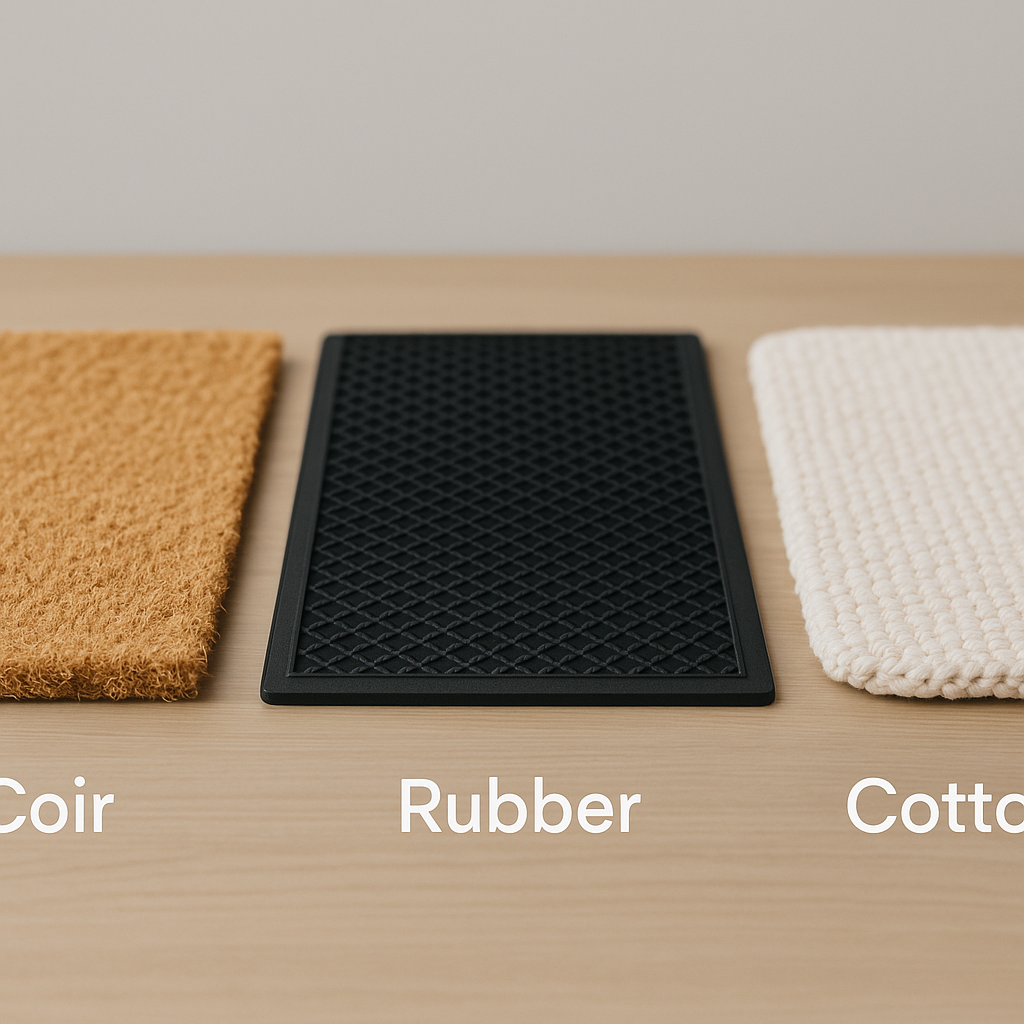
The humble entrance mat is your first and most important line of defense against dirt, moisture, and debris. It protects your floors, reduces cleaning time, and prevents dangerous slips and falls. But with so many materials available, choosing the right one can be overwhelming. Three of the most popular choices are coir, rubber, and cotton. Each has distinct advantages and is suited for different environments.
This comprehensive guide will break down the differences between coir, rubber, and cotton mats, helping you make an informed decision based on durability, function, and placement. Let’s determine which mat is the perfect fit for your home or business needs.

The All-Natural Scraper: Coir Mats
Coir mats are a classic and popular choice for entranceways, known for their traditional look and powerful scraping ability. These mats are crafted from a completely natural and renewable resource, making them a favorite for the eco-conscious consumer.
What Are Coir Mats?
Coir is a natural fiber extracted from the outer husk of coconuts. These tough, coarse fibers are spun and woven to create highly durable mats. The inherent strength of the coconut fiber, which is designed to protect the fruit from the elements, makes it an excellent material for brushing dirt and mud from the soles of shoes. For more on the material, see this in-depth overview of coir fiber from ScienceDirect.

Pros of Coir Mats
- Excellent Dirt Scraping: The bristly texture of coir is incredibly effective at removing caked-on mud, sand, and other coarse debris from footwear.
- Natural and Eco-Friendly: As a byproduct of the coconut industry, coir is a sustainable and biodegradable material, reducing environmental impact.
- Absorbent: Coir fibers can absorb a significant amount of water, helping to keep initial moisture from being tracked indoors.
- Classic Aesthetic: These mats offer a rustic and welcoming look that complements a wide range of architectural styles.
Cons of Coir Mats
- Sheds Fibers: Especially when new, coir mats are prone to shedding, which can create a bit of a mess around the mat itself.
- Can Harbor Mildew: If a coir mat becomes saturated with water and is not allowed to dry properly, it can develop mold or mildew.
- Not for Uncovered Areas: Constant exposure to heavy rain and direct sunlight can cause coir to degrade, darken, and break down faster. They perform best in covered or semi-protected entryways.
Best Use Cases for Coir Mats
Coir mats are ideal for covered front porches, patios, and residential entrances with moderate foot traffic. They are the perfect initial scraper to remove the worst of the outdoor grime before someone steps inside.
The Indestructible Protector: Rubber Mats
When it comes to sheer durability and all-weather performance, rubber mats are in a class of their own. Often found at the entrances of commercial buildings, industrial facilities, and high-traffic businesses, rubber mats are built to last.
What Are Rubber Mats?
Entrance mats made from rubber can be crafted from natural, synthetic, or recycled rubber—often from car tires. Their construction focuses on resilience, slip resistance, and functionality. Many feature textured surfaces with cleats or channels designed to scrape debris and channel water away effectively.

Pros of Rubber Mats
- Unmatched Durability: Rubber is resistant to tearing, cracking, and crushing, making it the ideal choice for areas with thousands of daily footfalls.
- Superior Slip Resistance: The high-traction surface of rubber provides excellent grip even when wet, significantly enhancing safety and helping to prevent falls, a key concern outlined by the Occupational Safety and Health Administration (OSHA).
- Completely Weatherproof: Rubber is impervious to rain, snow, and UV rays, making it the perfect choice for fully exposed outdoor locations in any climate.
- Easy to Clean: Most dirt and moisture can be simply hosed off, and the non-porous surface dries quickly.
- Eco-Friendly Options: Many rubber mats are made from recycled materials, which helps divert waste from landfills, as noted by the EPA on rubber recycling.
Cons of Rubber Mats
- Heavy Weight: Their dense construction can make them heavy and difficult to move for cleaning.
- Initial Odor: New rubber mats, particularly those made from recycled materials, can have a distinct rubber smell that dissipates over time.
- Utilitarian Appearance: While highly functional, some may find the aesthetic of standard rubber mats to be more industrial than decorative.
Best Use Cases for Rubber Mats
Rubber mats are the ultimate solution for commercial entrances, industrial settings, schools, hospitals, and any outdoor area that faces harsh weather and heavy foot traffic. They are a must-have for safety-critical zones.
The Absorbent Specialist: Cotton Mats
While coir and rubber focus on scraping dirt outside, cotton mats specialize in capturing fine dust and absorbing moisture once someone is already indoors. They are designed for comfort, absorption, and ease of maintenance.
What Are Cotton Mats?
Cotton mats are textile mats made from woven cotton fibers. They are typically placed just inside the door and are valued for their softness and incredible ability to soak up water. They often feature a rubber or non-slip backing to keep them securely in place.

Pros of Cotton Mats
- High Absorbency: Cotton can hold a large amount of water relative to its weight, making it exceptional at drying the bottoms of shoes and preventing wet footprints on indoor floors.
- Soft and Comfortable: They provide a soft, pleasant feel underfoot, adding a touch of comfort to an entrance.
- Machine Washable: Most cotton mats can be thrown directly into the washing machine, making them the easiest to keep clean and fresh.
- Variety of Designs: They come in a vast array of colors, patterns, and sizes to match any interior decor.
Cons of Cotton Mats
- Low Durability for Scraping: Cotton fibers are not designed to scrape coarse dirt or mud and will quickly become soiled and damaged if used for this purpose.
- Strictly for Indoor Use: They are not weather-resistant and will be ruined if left outside.
- Can Flatten Over Time: In high-traffic areas, the pile can become crushed and less effective over time.
Best Use Cases for Cotton Mats
Cotton mats are for indoor use only. They are perfect as the second mat in an entry system, placed just inside the door to catch any remaining moisture and fine dust. They are also great for use in kitchens, bathrooms, and laundry rooms.
Coir vs. Rubber vs. Cotton: A Quick Comparison
| Feature | Coir | Rubber | Cotton |
|---|---|---|---|
| Primary Function | Scraping coarse dirt | Scraping, Drainage, Safety | Absorbing water & dust |
| Best Location | Outdoor (Covered) | Outdoor (Exposed) | Indoor Only |
| Durability | Good | Excellent | Fair |
| Moisture Handling | Absorbs (dries slowly) | Channels away (dries fast) | Absorbs (dries slowly) |
| Maintenance | Shake or beat clean | Hose down | Machine washable |
The Best Strategy: A Two-Mat System for Ultimate Floor Protection
Professionals know that no single mat can do it all. The most effective strategy for keeping your floors clean and safe is a “two-mat system.” This system leverages the strengths of different materials for comprehensive protection:
- The Scraper Mat (Outdoor): Place a durable, weather-resistant mat like a rubber mat or a coir mat (if covered) outside the entrance. Its job is to remove the heavy, coarse dirt and the bulk of the moisture.
- The Wiper Mat (Indoor): Place an absorbent mat like a cotton mat or another dedicated wiper mat directly inside the door. Its job is to capture any remaining fine dust and dry the bottoms of shoes completely.
This dual-mat approach is the gold standard in commercial buildings and is equally effective for any home. It ensures your floors stay cleaner, safer, and last longer.
Making Your Final Decision
Choosing between coir, rubber, and cotton comes down to understanding your specific needs.
Choose coir for its excellent scraping ability and natural charm in a covered outdoor setting.
Choose rubber for its unbeatable durability, safety, and all-weather performance in high-traffic or exposed commercial and residential areas.
Choose cotton for its superior water absorption and easy-to-clean properties strictly for indoor use.
By assessing your entrance’s location, traffic levels, and weather exposure, you can select the perfect mat—or combination of mats—to keep your space pristine and welcoming.