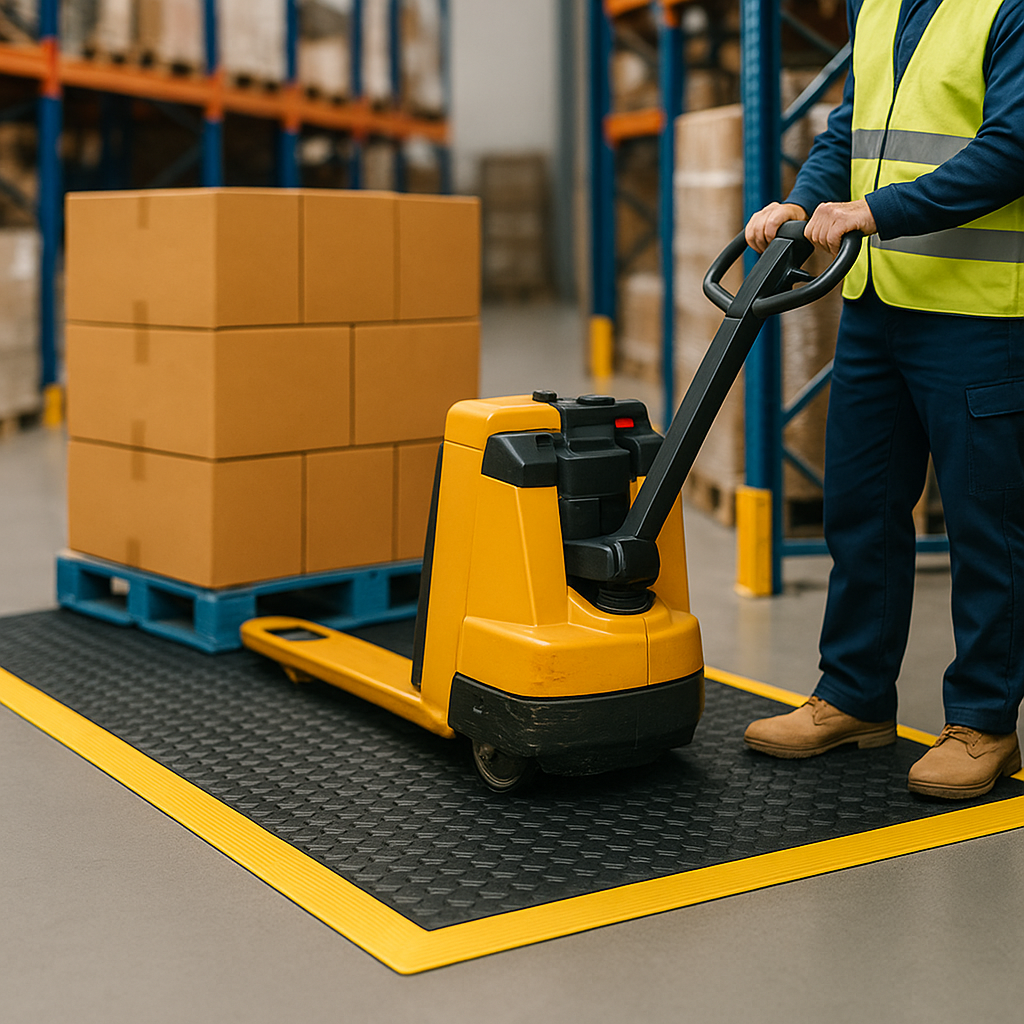
Warehouses are the lifeblood of modern commerce, dynamic environments buzzing with constant activity. But beneath the efficiency and logistics lies a significant risk: the floor itself. A hard, unforgiving concrete slab can be a source of workplace injuries, employee fatigue, and damaged goods. The solution is often right underfoot. strategic implementation of industrial matting can transform your facility, boosting safety, productivity, and your bottom line.

The Hidden Dangers: Why Warehouse Floors Are a Major Concern
While seemingly benign, a standard warehouse floor presents several challenges that can impact daily operations and long-term employee well-being.
- Slips, Trips, and Falls: According to the U.S. Bureau of Labor Statistics, slips, trips, and falls are among the most common causes of workplace injuries, leading to significant lost workdays. Spills, debris, and slick loading docks create hazardous zones that can be easily mitigated.
- Worker Fatigue: Standing for hours on hard concrete is physically draining. It can lead to musculoskeletal issues in the feet, legs, and back, a condition recognized by health organizations like the Canadian Centre for Occupational Health and Safety (CCOHS). This chronic discomfort decreases morale and can severely hamper productivity.
- Equipment and Product Damage: Vibrations from heavy machinery can damage the floor over time. Additionally, dropped items—especially sensitive electronics or fragile goods—are far more likely to break upon impact with concrete.
A Deep Dive into Industrial Matting Solutions
Industrial matting is a broad category of specialized floor coverings designed to address specific operational and safety challenges in demanding environments. Unlike simple rugs or carpets, these mats are engineered from durable materials like rubber, nitrile, and vinyl to withstand heavy use while providing critical benefits.

Types of Industrial Matting for Warehouses and Their Benefits
Choosing the right mat depends entirely on the specific needs of each area within your warehouse. Here’s a breakdown of the most effective types:
1. Anti-Fatigue Mats
Perhaps the most crucial mat for employee well-being, anti-fatigue mats are a game-changer for standing workstations. Their cushioned surface promotes subtle, continuous micro-movements in the leg muscles. This stimulates blood flow and prevents the pain and stiffness associated with standing on hard surfaces.
- Primary Benefit: Reduces worker fatigue, minimizes lower back and leg pain, and increases concentration and productivity.
- Best For: Packing stations, assembly lines, shipping and receiving desks, and any area where employees stand for extended periods.
2. Non-Slip / Anti-Slip Mats
Traction is paramount for safety. Non-slip mats feature aggressive surface textures and are often made from materials that maintain their grip even when wet or oily. Nitrile rubber, for instance, is highly resistant to grease and chemicals, making it ideal for industrial settings.
- Primary Benefit: Drastically reduces the risk of slips and falls.
- Best For: Loading docks, transition areas between outdoors and indoors, wash-down areas, and any location prone to spills.
3. Anti-Static (ESD) Mats
In warehouses that handle sensitive electronic components, a single static shock can destroy thousands of dollars in inventory. Anti-static or Electrostatic Dissipative (ESD) mats are designed to safely draw static charge away from workers and dissipate it into the ground, protecting delicate products from damage.
- Primary Benefit: Prevents electrostatic discharge, safeguarding sensitive electronics and components.
- Best For: Electronics assembly stations, IT server rooms, and quality control areas for tech products.
4. Vibration-Dampening Mats
Heavy machinery, generators, and compressors create powerful vibrations that can damage floors, create distracting noise, and cause equipment to “walk” or shift over time. Heavy-duty vibration-dampening mats, typically made from high-density rubber, absorb this energy.
- Primary Benefit: Protects floors from cracking, reduces noise pollution, and keeps machinery stable.
- Best For: Underneath large motors, industrial machinery, and generators.
Choosing the Right Matting: A Practical Guide
Selecting the correct matting requires a quick assessment of your environment:
- Identify the Hazard: Is the primary concern worker fatigue, liquids and spills, static electricity, or vibration? This will determine the type of mat you need.
- Assess Traffic: Consider the level and type of traffic. Will it be foot traffic only, or will heavy carts and forklifts pass over the area? This dictates the required durability.
- Check for Edges: Always choose mats with beveled or sloped edges. A straight, thick edge can introduce a new trip hazard, defeating the purpose of the mat.
- Material Matters: For oily or greasy areas, a 100% nitrile rubber mat is essential. For general-purpose anti-fatigue in dry areas, a vinyl or foam-based mat may suffice.
The ROI of Investing in Quality Warehouse Matting
Purchasing industrial matting isn’t an expense; it’s an investment with a clear and demonstrable return.
The National Safety Council reports that the average cost of a medically consulted workplace injury is over $40,000. By preventing even a single serious slip-and-fall incident, a comprehensive matting system can pay for itself many times over. Add in the benefits of increased productivity from more comfortable and focused employees, reduced product damage, and a longer lifespan for your warehouse floors, and the financial argument becomes undeniable.
By taking a proactive approach to flooring, you create a safer, more efficient, and more profitable operation. Investing in the right industrial matting protects your most valuable assets: your people and your products.