
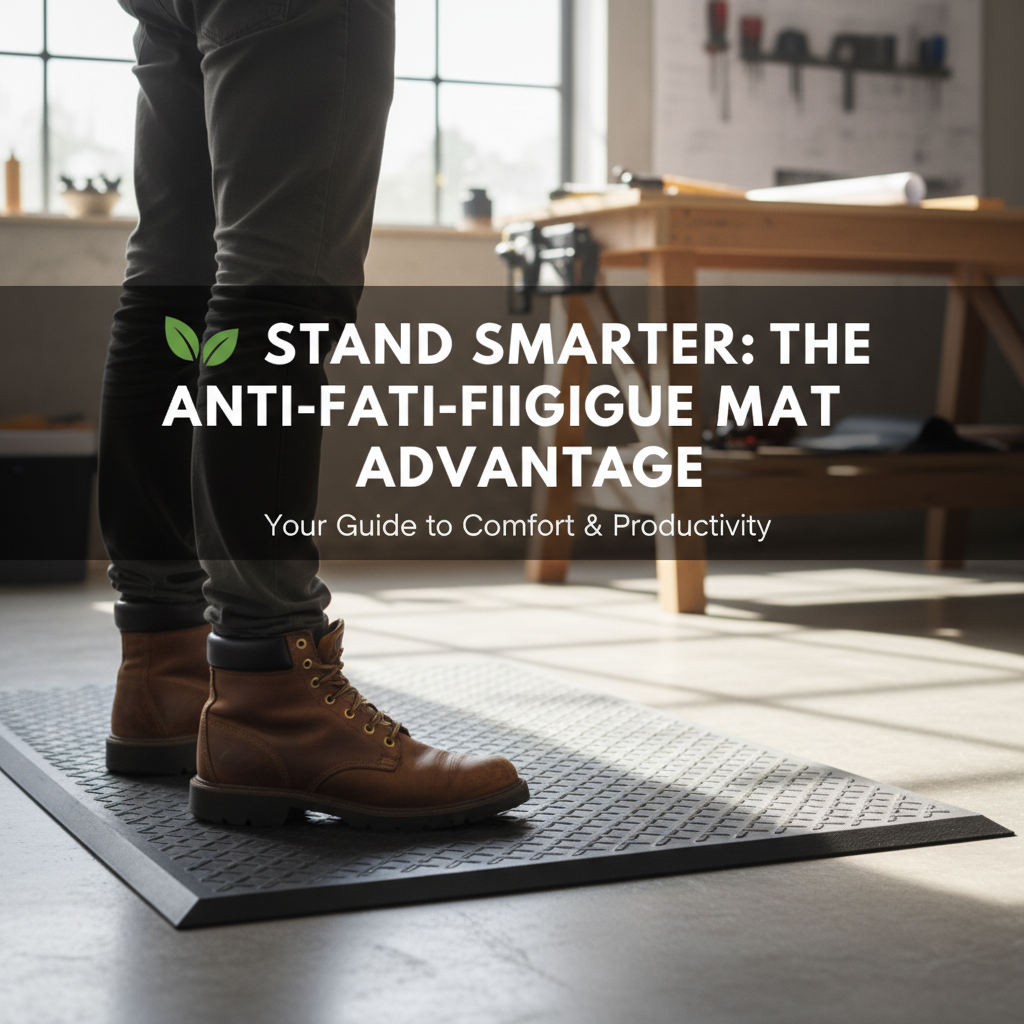
In today’s fast-paced work environments, both office professionals and industrial workers are increasingly spending significant portions of their day on their feet. While standing offers certain health benefits over prolonged sitting, prolonged standing on hard surfaces can lead to its own set of problems, including fatigue, discomfort, and even long-term health issues. The solution? High-quality anti-fatigue mats. These often-underestimated tools are crucial for enhancing comfort, boosting productivity, and safeguarding the health of individuals working at standing desks or in demanding factory settings.
The Hidden Costs of Standing Without Support
Standing for extended periods, whether at a modern standing desk or on a factory floor, places considerable strain on the body. Gravity constantly pulls us down, compressing the spine and forcing our leg and foot muscles to work harder to maintain an upright posture. This static load can restrict blood flow, leading to muscle fatigue, stiffness, and discomfort in the feet, legs, and lower back.
According to the Occupational Safety and Health Administration (OSHA), prolonged standing can contribute to musculoskeletal disorders (MSDs), including conditions like plantar fasciitis, Achilles tendinitis, varicose veins, and chronic lower back pain. For businesses, this translates to increased absenteeism, reduced productivity, and potential workers’ compensation claims. For individuals, it means daily discomfort that erodes quality of life.
How Anti-Fatigue Mats Revolutionise Your Stance
Anti-fatigue mats are engineered to combat the negative effects of prolonged standing by providing a cushioned, supportive surface. Unlike hard floors, these mats encourage subtle, continuous micro-movements in the feet and leg muscles. This gentle swaying helps to:
- Stimulate Blood Circulation: The slight muscle contractions act like a pump, improving blood flow and preventing blood from pooling in the lower extremities.
- Reduce Pressure Points: The soft material conforms to the shape of the feet, distributing body weight more evenly and reducing pressure on specific points like the heels and balls of the feet.
- Absorb Shock: Mats absorb the impact of standing, reducing the jarring effect on joints and the spine.
- Insulate Against Cold: In industrial settings, mats can provide a barrier against cold concrete floors, adding another layer of comfort.
The result is a significant reduction in fatigue, pain, and discomfort, allowing individuals to maintain focus and productivity throughout their workday.
Beyond the Office: Anti-Fatigue Mats in Industrial & Commercial Settings
While standing desks have brought anti-fatigue mats into the office spotlight, their benefits have long been recognised in industrial and commercial environments where workers often stand for entire shifts. Think manufacturing plants, assembly lines, workshops, retail checkouts, laboratories, and catering kitchens.
In these demanding environments, anti-fatigue mats from Specialist Mats or Ideal Mats offer more than just comfort:
- Enhanced Safety: Many industrial anti-fatigue mats feature textured surfaces and robust construction, providing excellent slip resistance, even in oily or wet conditions. Bevelled edges reduce tripping hazards.
- Durability: Designed to withstand heavy use, chemical spills, and extreme temperatures, these mats are built for the toughest conditions.
- Improved Worker Morale: Providing ergonomic support demonstrates a commitment to employee well-being, which can lead to higher morale, reduced turnover, and a more positive work environment.
- Reduced MSDs and Absenteeism: By mitigating the physical strain of standing, businesses can see a decrease in work-related injuries and sick days, leading to significant cost savings.
Choosing the Perfect Anti-Fatigue Mat: What to Consider
Selecting the right anti-fatigue mat depends heavily on the specific environment and user needs. Here are key factors to consider:
1. Material Composition
- Polyurethane: Often found in premium office mats, offering excellent cushioning and rebound properties for superior comfort.
- Rubber (Nitrile Rubber): Ideal for industrial settings, providing outstanding durability, chemical resistance (oils, greases), and often anti-slip properties.
- PVC (Polyvinyl Chloride): A common and versatile material, offering good anti-fatigue properties for general use, often at a more economical price point.
2. Thickness and Density
A thicker mat generally offers more cushioning, but the density of the material is equally important. A high-density mat will provide better support and retain its properties longer. For heavy industrial use, a robust, dense mat is essential, while for office use, a slightly softer, yet supportive, mat might be preferred.
3. Surface Texture and Edges
- Smooth vs. Textured: Smooth surfaces are easy to clean, while textured surfaces offer enhanced grip, crucial in wet or oily areas.
- Bevelled Edges: Essential for safety, these sloped edges prevent mats from becoming tripping hazards, particularly important in high-traffic areas.
4. Environmental Factors
Consider specific workplace hazards:
- Chemical Resistance: Crucial for labs, workshops, and kitchens where spills are common.
- Anti-Static Properties: Necessary in environments with sensitive electronics.
- Drainage: Mats with drainage holes are ideal for wet areas, allowing liquids to pass through, improving traction and hygiene.
- Fire Resistance: Important in areas where sparks or high heat are present.
For personalised advice and a wide range of options tailored to specific needs, exploring specialist providers like Specialist Mats or Ideal Mats is highly recommended. They offer solutions designed for everything from individual standing desks to complex industrial layouts, ensuring optimal safety and comfort.
Integrating Anti-Fatigue Mats into Your Workflow
Once you’ve chosen the right mat, integrating it into your workspace is straightforward:
- Placement: Position the mat directly where you stand for prolonged periods. For standing desks, ensure it covers your typical standing area. In factories, place them at workstations, assembly lines, or any spot where employees are stationary.
- Maintenance: Regular cleaning extends the life of your mat. Most mats can be easily cleaned with soap and water. Always check manufacturer guidelines for specific cleaning instructions, especially for industrial mats exposed to chemicals.
- Ergonomic Setup: Remember that anti-fatigue mats are part of a holistic ergonomic approach. Combine them with proper footwear, regular movement breaks, and an ergonomically adjusted workstation (e.g., monitor height, keyboard/mouse position) for maximum benefit.
The Investment in Well-being and Productivity
Investing in high-quality anti-fatigue mats is an investment in the health and productivity of your workforce or your own personal well-being. The initial cost is quickly offset by the reduction in discomfort, fatigue, and potential health issues. For businesses, this translates into fewer sick days, higher morale, and a more efficient operation. For individuals, it means more comfortable and focused workdays. Moreover, for businesses looking to enhance their brand presence while providing comfort, custom solutions from Logo-Mats, Premier Logo Mats, and Specialist Logo Mats offer a unique way to combine ergonomics with effective branding.
Whether you’re optimising a home office standing desk or outfitting an entire industrial facility, the right anti-fatigue mat from trusted suppliers like Ideal Mats or Specialist Mats can make a profound difference. Don’t let prolonged standing be a pain point; transform your workspace into a zone of comfort and efficiency.